
Cape York Peninsula, Australia’s northernmost point, is renowned for its rugged landscapes and rich cultural heritage. But how did this remote region evolve from a vast wilderness to a hub of European settlement, agriculture, and gold mining? Here’s a detailed look, including a Cape York history timeline and key Cape York history facts.

European interest in Cape York began in the early 17th century. Dutch navigator Willem Janszoon made the first recorded European landing in 1606, marking the start of exploration in the region.
1606: First recorded European landing by Willem Janszoon
Mid-1800s: European settlers begin establishing pastoral stations
1865: Cape York officially opened for European settlement
The mid-19th century saw more explorers, settlers, and missionaries venturing into Cape York, laying the foundations for the region’s later development.

Pastoralism became a major industry in Cape York. Settlers established cattle stations, which not only supported livestock farming but also facilitated other agricultural activities in remote areas. These stations were vital for economic development and infrastructure in the otherwise isolated peninsula.

The discovery of gold in the Palmer River in 1873 by James Venture Mulligan triggered one of Australia’s most significant gold rushes. Prospectors from across Australia and overseas flocked to Cape York, establishing camps and towns in search of fortune.
Gold mining shaped both the economy and culture of Cape York, and its legacy can still be seen in historic towns and abandoned mining sites today.
Indigenous communities form a major part of Cape York’s history long before European settlers arrived, the Australian Aboriginal people were already skilled in hunting, land use and resource management.

Join an epic 6-day Bucket List motorcycle tour from Cairns to the Tip of Australia, riding through the remote landscapes of Cape York.
 CYMCA OGIO Tech Vault bag
Price range: $150.00 through $180.00
CYMCA OGIO Tech Vault bag
Price range: $150.00 through $180.00
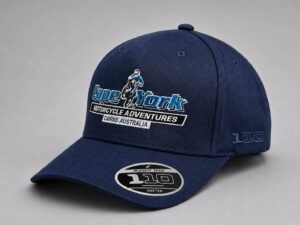 CYMCA Flexfit Hat
$55.00
CYMCA Flexfit Hat
$55.00
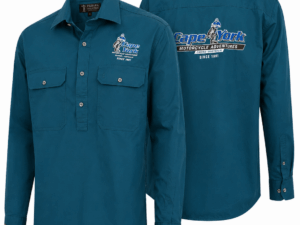 Pilbara CYMCA shirt
$68.00
Pilbara CYMCA shirt
$68.00
 CYMCA Classic T-shirt
$28.00
CYMCA Classic T-shirt
$28.00
 Rider Jersey
$65.00
Rider Jersey
$65.00
© Cape York Motorcycle Adventures 2026
